The IIA Releases New Global Practice Guide on Evaluating Ethics Programs
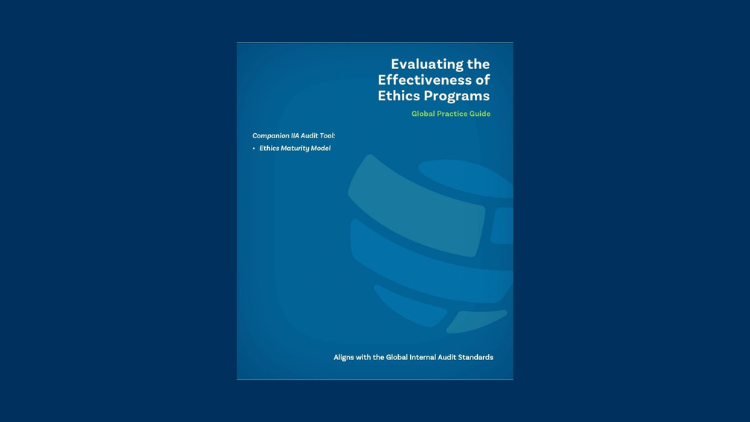
A strong ethical culture is widely recognized as a cornerstone of effective governance. To support internal auditors in assessing whether ethics programs are designed and operating effectively, The Institute of Internal Auditors (IIA) has released a new Global Practice Guide: Evaluating the Effectiveness of Ethics Programs.
The publication aligns with the Global Internal Audit Standards and provides practical guidance, audit approaches, and evaluation criteria for assessing ethics programs across a wide range of organizations.
Ethics as a Governance Priority
Ethics programs play a critical role in shaping organizational culture and reinforcing expected standards of conduct. Effective programs establish clear behavioral expectations, provide accessible reporting mechanisms, support timely investigations, promote accountability, and protect individuals who raise concerns in good faith.
The guide emphasizes that ethical culture extends beyond policies and procedures. It is reflected in leadership behavior, decision-making, incentives, communication, and the consistency with which ethical expectations are applied throughout the organization.
Supporting Internal Audit Responsibilities
The Global Internal Audit Standards require internal auditors to understand, promote, and evaluate ethical culture. Standard 9.4 specifically requires internal audit plans to consider coverage of the effectiveness of compliance and ethics programs.
The new Practice Guide provides a structured framework to help internal auditors evaluate:
Program Design
Whether ethics-related policies, codes of conduct, reporting mechanisms, training programs, and monitoring activities are appropriately designed and aligned with organizational objectives.
Program Implementation
Whether ethics programs are effectively embedded in day-to-day operations and supported through communication, training, reporting, escalation, and accountability processes.
Program Effectiveness
Whether ethics programs influence behavior, support ethical decision-making, encourage employees to speak up, and contribute to a culture of integrity across the organization.
Addressing Emerging Ethical Risks
The guide also highlights emerging areas that organizations and auditors should consider when evaluating ethics programs, including:
- Responsible use of artificial intelligence and technology.
- Data governance and protection.
- ESG-related commitments and reporting.
- Third-party relationships and supply chains.
- Cultural and behavioral risks associated with remote and hybrid working environments.
These developments reinforce the need for ethics programs to evolve alongside changing business models, technologies, and stakeholder expectations.
Companion Ethics Maturity Model
To support assessments and reporting, the publication is accompanied by an Ethics Maturity Model. This tool helps organizations evaluate the maturity of their ethics programs and identify opportunities for continuous improvement.
Learn More
The Global Practice Guide Evaluating the Effectiveness of Ethics Programs is available through The IIA Global Guidance library.
👉 This is for members only. Access the publication here:
https://www.theiia.org/en/content/ethics/global-guidance/evaluating-effectiveness-of-programs/